
Can You Actually Rewire Your Brain?
How to create new emotional patterns
The emotional brain.
Lili knows exactly how she’s going to react. Every time her boss asks her for a report due the following week, something in her immediately activates—the same knot in her stomach, the same urge to do anything but that. She calls a friend she hasn’t seen in months, reorganizes the kitchen drawers, buys things she doesn’t need. The whole week goes by like this. And the day before the deadline, her body sends the bill: sweaty hands, a racing heart, a mind that won’t stop producing images of failure, of being mocked, of her boss’s disappointed face. Sleep-deprived and exhausted, she manages to turn in the report on time. But the experience, once again, was terrible.
Lili knows this pattern by heart. She criticizes herself, promises that next time will be different. And yet, a month later, the scene repeats with almost mechanical precision. What Lili doesn’t know is that she’s not alone. What she’s experiencing is a response shared by many people who grew up in environments where they constantly had to prove they were enough—at home, at school, with the adults around them. That question that isn’t always spoken but is felt in the body: Am I good enough? If I try, will I be mocked, rejected, disapproved of?
It’s not a lack of discipline or character. It’s fear. And behind that fear, a belief that was formed long before the job, the boss, or the report.
Many of these experiences appear in the early years of life and carry such an intense emotional charge that the brain registers them as priority pathways, routes that activate automatically whenever similar conditions arise. Emotions like fear or deep sadness are neurologically more “sticky” than joy or surprise, because the brain classifies them as survival information and makes sure not to forget them. In fact, these emotional responses travel between 200 and 400 milliseconds before we become aware of them, and that’s why they feel so out of control.
The brain builds what we might imagine as pathways in a field: each time a farmer walks the same route to work, the grass flattens more, the path deepens, becomes more automatic. And where there was once grass, now there is only dirt.
The Brain’s Plasticity
When I explain this to my patients, the question that usually follows is almost always the same: “So there’s no fix for me?”
And the answer is a resounding no. Nothing could be further from the truth.
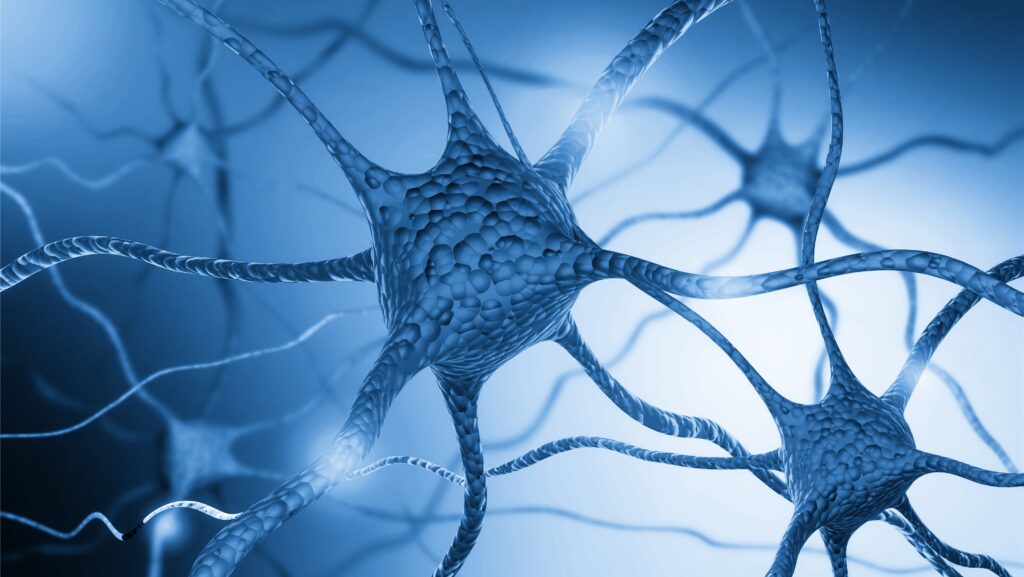
The nervous system has an extraordinary ability called neuroplasticity: the capacity to create new connections, to reorganize itself in response to new experiences, to reshape itself throughout life. It’s not exclusive to children’s brains. As long as the organism is alive, change is possible. Neuroplasticity has no expiration date.
And there’s something else that is rarely mentioned: this plasticity is not limited to the brain. The gut, for example, has its own nervous system—the so-called “second brain”—with around 500 million neurons and more than 90% of the body’s serotonin. When you feel “a knot in your stomach” before a difficult situation, it’s not just a metaphor: it’s your second brain responding. What happens in the body and what happens in the mind are not separate things.
“What is stored with emotion is transformed with emotion.”
The Creative Brain
Changing an emotional pattern requires, first of all, becoming aware of it. The first questions are not the most comfortable, but they are the most necessary: What do I feel in this situation? What moment in my past does it remind me of? Where do I feel it in my body—in my chest, my throat, my stomach? How intense is it?
Recognizing the connection between emotion and experience is the first real step. Because when you understand it, you can anticipate it. And when you can anticipate it, you can choose to respond differently.
For Lili, for example, the question that could change everything is not “How do I avoid the panic?” but this: What if this time the report turns out so well that my boss congratulates me in front of everyone? It sounds small. But that question does something very concrete in the brain: it plants doubt in the certainty of failure. And where there is doubt, hope can enter.
If you begin to walk that new path, even if you feel uncertain at first, with emotions of calm, anticipated pride, and satisfaction, you will literally be building an alternative pathway in your nervous system. Over time and with repetition, that new path becomes wider. The old one doesn’t disappear completely, but it starts to grow over with grass.
There is one tool I always mention in therapy, and science supports it: imagination. The brain does not clearly distinguish between what it experiences and what it vividly imagines with enough detail and emotion. Visualizing scenarios where you succeed, where you turn in the report and breathe with relief, where you stand in front of a group and surprise yourself with how well you do, activates the same circuits as if you were actually living it. This is not naive positive thinking. It is applied neuroscience.
You Have the Final Say
Maybe you saw yourself in Lili. Maybe your version of the report is a difficult conversation you postpone for weeks, a project you don’t start, an opportunity you let pass because something inside you says you are not enough. Whatever your pattern is, it has a name, it has an origin, and it has a solution.
Rewiring the brain is not about erasing yourself or forgetting what you lived through. It is about understanding that the girl or boy who learned to be afraid did what they had to do to survive at the time. And that today, as an adult, you have something you didn’t have then: the ability to choose a new path.
The first step is not the biggest one. It’s simply the first.
If something you read today resonates with you and you feel it’s time to start working on these patterns, seek the support of a mental health professional. You deserve to have someone help you walk that path.
Marisol Zuloaga M.
Clinical Psychologist in Neuropsychopedagogy