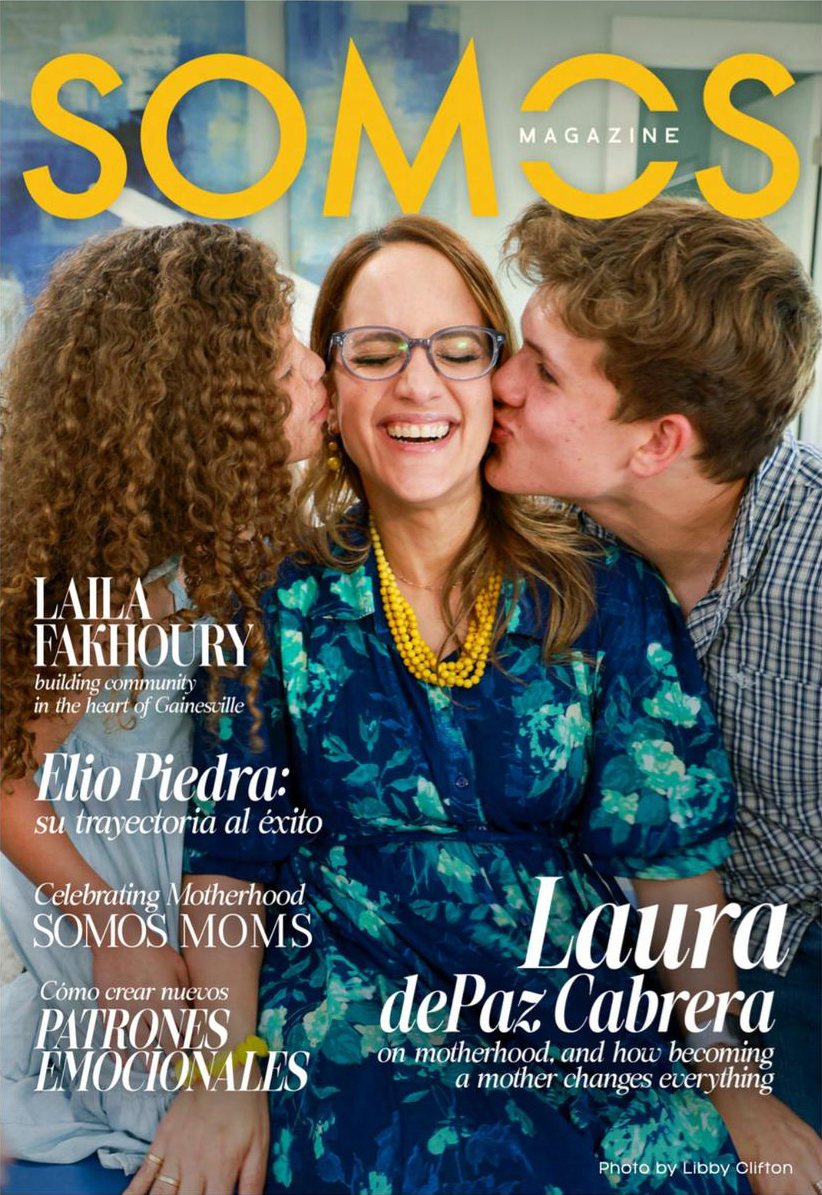
Laila Fakhoury is Building Community in the Heart of Gainesville

The Story of How Bazar. A Space for Everyone.
We met Laila Fakhoury in the middle of a busy downtown market. The event, a partnership between the City of Gainesville and How Bazar, was created to bring life to the streets during the quiet winter months. As we talked, she moved between directing vendors and showing exactly how she builds community in real-time.
Laila’s vision is deeply shaped by her Palestinian heritage, where she learned early that “community is everything and all we have.” Her work is rooted in recreating that feeling—a space where people don’t just gather, but truly belong. Coming from such a collective culture, she admits the more individualistic pace of American life once felt disheartening. But in Gainesville, she found something different: people quietly searching for the same sense of belonging, ese sentido de comunidad that feels like home. That realization remains at the core of what she’s been building through How Bazar.
She describes the space as a “third place”—a sociological sanctuary outside of home and work where people can decompress, co-work, and build lasting memories.
“You have your first place—home. Your second place—work. But to live a full life, you need a third,” she explains. “A place where you can just exist, meet people, create, and build something beyond who you are at home or at work.”
That vision takes shape in many ways: through the Big: Culture & Arts Festival, which she organizes with her best friend Jahi Khalfani, and in spaces like the Downtown Market Series, where we sat talking as the afternoon settled in and everything gradually came together around us.

For people who don’t know you, can you tell us about your journey?
I came to Gainesville to attend the University of Florida, where I double-majored in Family, Youth, and Community Sciences—a combination of social work and philosophy. The first day I arrived, I started working at the crisis center, doing crisis and suicide hotlines. I also worked in the hospital, at the Hippodrome Theater, and with the River Phoenix Center for Peacebuilding.
Even before college, I was already volunteering in the prison while still in high school.
All of this was really shaped by my identity as Palestinian. Growing up, I learned that community is everything, and that inspired me to give back.
Doing this work also helped me get to know Gainesville and appreciate the city, it’s resource-rich, supportive, open, and welcoming.
After getting more involved in social work, I started exploring Gainesville’s creative spaces. I loved how many different people were constantly creating new things. Being part of that inspired me to start hosting my own events and bringing people together in new ways.
The beginnings.
What inspired you to start How Bazar?
It started after a project with my friends Jahi and Khary Khalfani. In college, we created an independent music record label together—Dion Dia—using music for social good, recording in hospitals and prisons to help people preserve their stories. Then we began hosting events to fund those projects, and we quickly saw how powerful it was to bring people together. People who normally didn’t go out were showing up and finding real connection.
When COVID happened, everything stopped. That’s when we asked ourselves what else we could offer the community, and that’s how How Bazar began. We opened a small space in the Seagal Building and started hosting outdoor markets, creating a safe way for people to connect and for artists to sustain themselves. From there, it kept growing because it was filling a real need.
How would you describe How Bazar to someone who has never visited?
A third place where people are able to shape it into whatever they want it to be. People come in and work, co-work, study, hang out, relax, drink coffee, meet other people—really whatever they want the space to be. It’s also used for events, where anyone can plug in and use it in an accessible way to build their own experiences and bring their own communities together. I describe it as a community hub for people to create within and connect within
Why do you think people were drawn to this space in the first place?
Every time we did an event, the first question I asked myself was: how can we include as many people as possible? That approach started to diversify the events and make them extremely inclusive. My favorite part is standing there and taking a 360-degree look at the vendors. Everyone looks completely different, different interests, different backgrounds. People started to see that it was okay to explore, and that freedom created a stronger desire to connect.
Throughout our conversation, it became clear that the city is starting to recognize the impact of this third place. The very day we met, Laila had received a Beautification Award from the city. She seemed genuinely surprised: “I was like, what? I’m so surprised!” For years, How Bazar has been a DIY, grassroots, self-funded project.

Seeing the city give awards in 2023 and 2026 feels like a shift in Gainesville’s priorities—more attention on the creative community, on the arts, on the people quietly doing the work.
The obstacles.
What has been your biggest challenge?
So many! One that comes to mind was moving into this location. We were in a temporary space on a month-by-month contract and knew that wasn’t going to work. We wanted something purposefully central in downtown—right in the middle of the action, for our communities.
Getting this space was a big fight. The only reason it worked out is because we had been building community in that little temporary location. When we reached out for support, hundreds of people contacted the county and the City Commission. People were saying, “This needs to be an arts hub. We don’t need more leasing offices or spaces that don’t resonate with the community.”
That community support was the most validating thing I’ve ever experienced. There’s nothing greater than having people say, “Yes, we want this space.” That’s still the most motivating thing and knowing people want it, that we need to push through because so many are behind us.
What have you learned from the Gainesville community?
What I always say is that How Bazar exists because of Gainesville. It couldn’t have happened anywhere else. This community is connected, forgiving, open, and very weird. A space like this can’t happen everywhere—there are barriers in other places, a cliquey energy that exists in bigger cities.
Gainesville has an environment where it’s easy to experiment, easy to explore, as a business owner, as a creator, or even just as someone who wants to attend events. That openness makes it possible for a space like How Bazar to thrive.
¿What has it been like for your family to see what you’ve built?
Coming from a Middle Eastern background, this path looked very different from what they expected. Lawyer, doctor, something more understood. But in a way, they kind of saw it coming, because I’ve always been different from my siblings and my cousins.
Still, it took a while for them to really wrap their heads around it. That understanding didn’t come through explanation. It came through witnessing. Now they come to events, they see things like this come out in magazines, and they’re like, okay, we understand now. When you have that support, it’s everything.
Finally, you’re around the community all the time, what do you do to relax?
My favorite thing is to cook. It’s my main way to turn off my mind. If I say after a meeting, “I’m going home to cook,”everyone knows they’re not going to hear from me the rest of the night. I also love biking—it helps me clear my head. And I love going to other people’s events, to experience, get inspiration, and try not to think about my own. It’s nice to just be an attendee. That’s actually how all of this started.


While building this vision, Laila worked alongside a team for years. Recently, she shared a major transition: How Bazar, once a worker-owned collective with five partners, is entering a new chapter. As her partners move on to new paths, Laila is stepping into the role of sole owner—but her commitment hasn’t wavered. She says she’s “too in love” with the project to stop.
And that love shows.
The way people gather at the markets and come together, not just to shop, but to connect- and how a simple market transforms into something more meaningful.
In a city like Gainesville, where so many of us are building lives between cultures—entre aquí y allá—spaces like How Bazar remind us that community doesn’t just happen.
It’s created, protected, and shared.